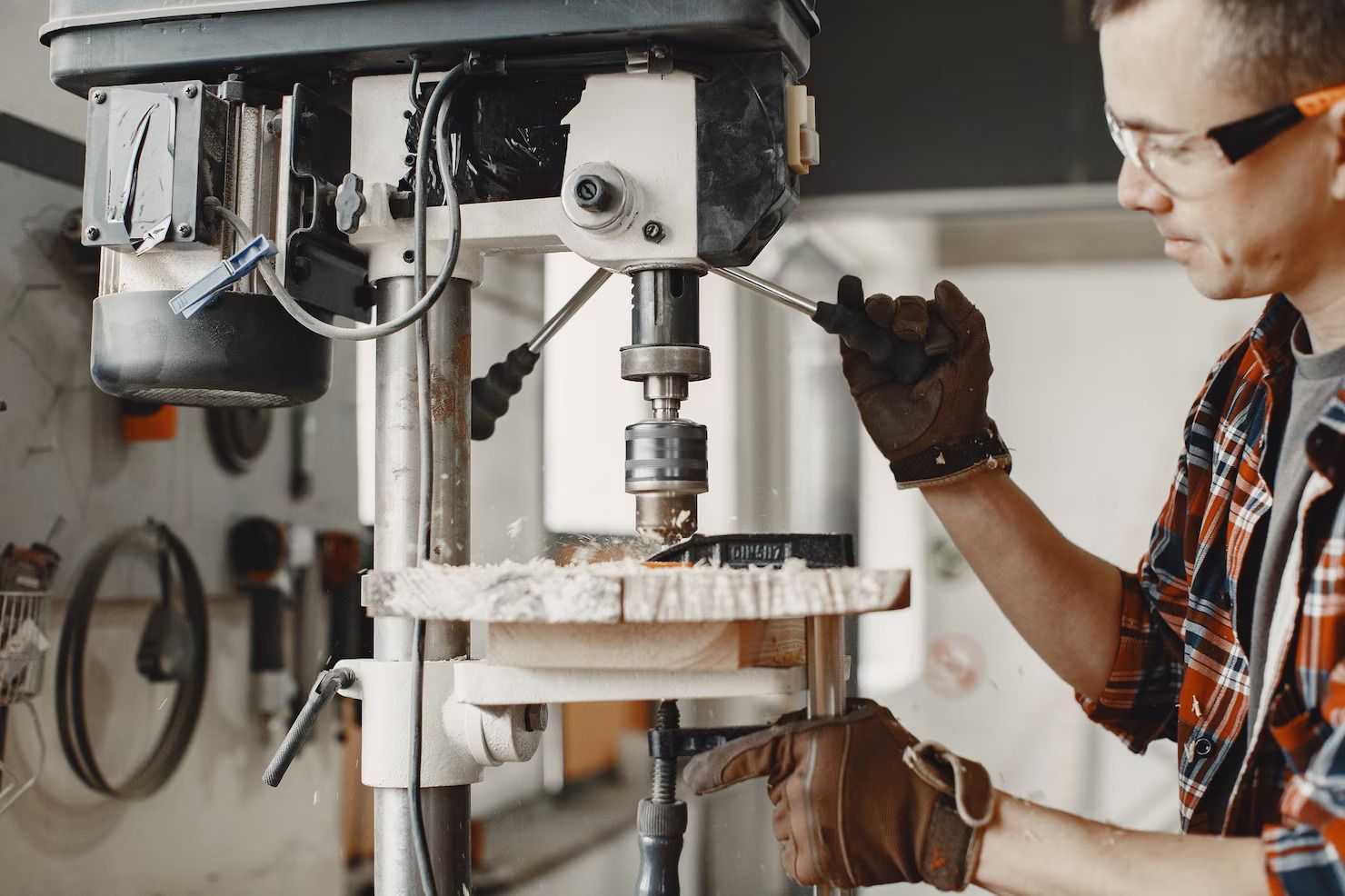
Drilling machines are mechanical tools designed to create holes in different materials such as metal, wood, plastic, and concrete. These machines use a rotating drill bit that removes material from a workpiece to produce a precise hole.
The concept of drilling tools has existed for centuries. Early drilling methods were manual and relied on simple mechanical tools. Over time, technological improvements led to the development of powered drilling machines used in manufacturing, construction, and engineering industries.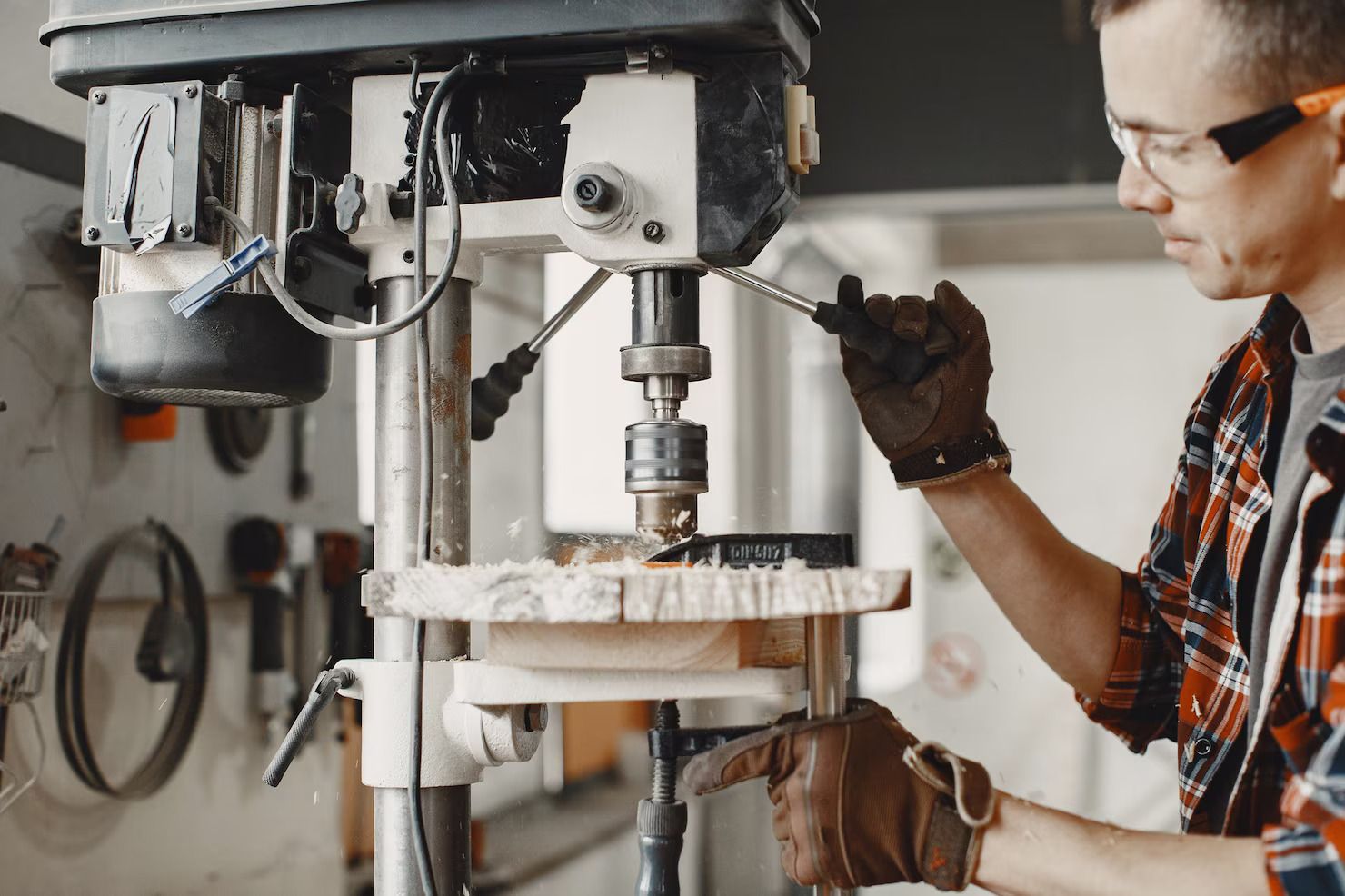
Modern drilling machines are designed to deliver high accuracy, repeatability, and efficiency. They are used in industries ranging from automotive production and aerospace engineering to construction and laboratory manufacturing processes.
A typical drilling machine includes several key components:
- Motor
- Spindle
- Drill bit
- Chuck
- Feed mechanism
- Base or table
Each component plays a role in controlling the rotation and movement required to cut material safely and precisely.
Why Drilling Machines Matter in Modern Industry
Drilling machines play an essential role in manufacturing and infrastructure development. Many industrial products require precisely drilled holes for fasteners, wiring channels, or mechanical assembly.
Without drilling equipment, many production processes would become slower and less accurate.
Several industries depend heavily on drilling machines:
- Automotive manufacturing
- Aerospace engineering
- Construction and structural fabrication
- Electronics assembly
- Metalworking workshops
These machines help solve several practical challenges in engineering production.
Common problems addressed by drilling machines include:
- Creating accurate holes for bolts and screws
- Ensuring alignment in mechanical assemblies
- Supporting automated manufacturing systems
- Reducing manual labor and improving precision
As industries adopt automation and digital manufacturing methods, drilling equipment continues evolving to meet modern production demands.
Types of Drilling Machines Used in Industry
Different drilling machines are designed for specific tasks and production environments.
| Type of Machine | Typical Application | Key Feature |
|---|---|---|
| Bench Drilling Machine | Small workshops | Compact design |
| Pillar Drilling Machine | Medium manufacturing | Strong vertical structure |
| Radial Drilling Machine | Large components | Movable arm for flexibility |
| CNC Drilling Machine | Precision manufacturing | Computer-controlled operation |
| Portable Drilling Machine | Construction sites | Lightweight mobility |
Each machine type balances precision, power, and flexibility depending on the application.
Bench drilling machines are often used in educational labs and small workshops. In contrast, CNC drilling machines operate in automated manufacturing lines where high accuracy and consistency are required.
Drilling Machine Working Principles
Drilling machines operate using rotational cutting motion. The motor rotates the drill bit while the operator or automated feed system pushes the bit into the material.
The drilling process usually follows these steps:
- Position the workpiece securely on the machine table
- Align the drill bit with the drilling point
- Start the motor and begin rotation
- Apply downward feed pressure
- Remove chips and complete the hole
Proper cutting speed and feed rate are important to prevent overheating or tool damage.
Different materials require different drilling speeds.
| Material | Recommended Speed (RPM Range) |
|---|---|
| Aluminum | 2000–3000 RPM |
| Steel | 500–1000 RPM |
| Wood | 1500–2500 RPM |
| Plastic | 1000–2000 RPM |
These values may vary depending on drill diameter and machine capacity.
Recent Developments in Drilling Technology (2024–2025)
Over the past year, drilling technology has continued to evolve with new manufacturing trends and digital integration.
Several developments reported across engineering publications in 2024 and early 2025 include improvements in smart manufacturing systems and machine automation.
Recent advancements include:
- Integration of CNC drilling systems with industrial automation platforms
- Increased use of sensor-based monitoring for tool wear detection
- Development of energy-efficient electric motors
- Use of AI-assisted manufacturing software for drilling optimization
Manufacturers are also improving drilling machines to support Industry 4.0 environments, where machines communicate with digital production systems.
These improvements help manufacturers reduce downtime, maintain consistent drilling quality, and monitor machine performance more effectively.
Safety Standards and Industrial Regulations
Drilling machines are regulated by workplace safety guidelines to prevent accidents and ensure safe industrial operation.
In many countries, manufacturing environments must follow safety standards established by occupational safety authorities.
Examples of safety guidelines commonly applied to drilling machines include:
- Proper machine guarding
- Use of protective equipment
- Regular maintenance inspections
- Emergency stop mechanisms
- Safe electrical system installation
In India, industrial equipment usage is influenced by safety frameworks such as:
- Factory safety regulations
- Industrial workplace safety standards
- Electrical equipment compliance requirements
These regulations encourage organizations to maintain safe operating environments and reduce workplace injuries.
Useful Tools and Resources for Drilling Operations
Modern drilling operations often rely on digital tools and software to improve productivity and precision.
Several categories of tools are commonly used alongside drilling machines.
Engineering calculation tools
- Cutting speed calculators
- Feed rate estimators
- Tool life prediction tools
Design and manufacturing software
- CAD design software
- CAM manufacturing software
- CNC programming tools
Operational resources
- Engineering reference charts
- Material machining databases
- Industrial safety manuals
These resources help technicians and engineers determine the best drilling parameters for different materials and machine configurations.
Drilling Machine Efficiency Comparison
Below is a simplified comparison of manual versus automated drilling systems.
| Feature | Manual Drilling | CNC Drilling |
|---|---|---|
| Precision | Moderate | High |
| Production Speed | Lower | Higher |
| Human Involvement | High | Reduced |
| Repeatability | Limited | Very consistent |
| Data Monitoring | Minimal | Advanced |
Automated drilling systems improve production efficiency in high-volume manufacturing environments, while manual machines remain useful for workshops and small-scale fabrication.
Frequently Asked Questions
What materials can drilling machines work with?
Drilling machines can operate on a wide variety of materials including metal, wood, plastic, composite materials, and certain types of stone or concrete. The drill bit type and cutting speed usually change depending on the material.
What is the difference between a drill press and a drilling machine?
A drill press is a type of drilling machine designed for stationary operation. The term "drilling machine" is broader and may include portable drills, radial drills, and CNC drilling systems.
How does drill bit selection affect drilling results?
Drill bit geometry, material composition, and coating influence cutting efficiency. For example, carbide drill bits are commonly used for harder materials, while high-speed steel bits are widely used for general applications.
Why is lubrication sometimes used during drilling?
Lubrication or cutting fluid helps reduce heat, remove metal chips, and extend the life of the drill bit. It also improves surface finish and drilling accuracy.
What factors affect drilling accuracy?
Several variables influence accuracy, including machine rigidity, spindle speed, feed rate, tool alignment, and workpiece stability.
Conclusion
Drilling machines remain fundamental tools in modern manufacturing and engineering operations. From simple workshop machines to advanced CNC drilling systems, these tools enable precise hole creation in a wide range of materials.
As industries adopt digital manufacturing technologies, drilling machines continue evolving with improved automation, monitoring systems, and energy-efficient designs.
Understanding drilling machine types, operating principles, and safety considerations helps engineers, technicians, and learners better appreciate the role of these machines in industrial production.
With ongoing advancements in smart manufacturing and automation, drilling technology will likely continue supporting efficient and accurate fabrication processes across many sectors.